


In his long journey of writing on prose and poetry of different genre, this writer has seldom touched cinema, perhaps just one or two poem(s) and an essay on Indian cinema. So many genetic and environmental factors, including family and social among others, determine how a child grows to an adult cultivating hobbies, attributes and ethics (moral standards). Hailing from a rather conservative family, I recall from early childhood that things like Nautanki (a kind of Loknatya or Folk Musical Drama) and cinema didn’t carry good reputation in family those days i.e. during 1950s and 1960s (Situation has changed now with Nautanki almost non-existent and cinema as the most popular mode of entertainment). So, as a growing teenager, this writer had only occasionally seen Hindi movies which could be counted on fingers. Unlike many other friends and acquaintances, he never idolized any cine celebrity sans an exception that he had developed a special liking for the famous nationalist actor late Manoj Kumar (Harikrishan Giri Goswami) and singer late Mukesh (Mukesh Chand Mathur), and this liking still exists.

Following the secondary education (equivalent to 12th standard in India), he joined the University of Lucknow, India, and stayed in a boys’ hostel of science students for a little over eight years as undergraduate, postgraduate and research scholar. This was the time of near total personal freedom and he regularly watched Hindi and occasionally English movies mostly with friends and classmates. Later on, the frequency of cinema hall visits suo moto reduced after joining the civil service with only intermittent outings with family once or twice in a few months. He recalls this occasional yet recurring occurrence almost entirely stopped after 2004, the movie Veer Zaara was last, and following that year, Hindi/English movies can easily be counted on fingers. Having said this, I tried and could readily recall two Bollywood movies viz. Padmavat and The Kashmir Files, both for different reasons, in cinema halls. Of course, I still watch movies occasionally on television/OTT, those having received audiences’ good response and review.
The submission made in the foregoing paragraphs was considered necessary when it stuck to this writer’s mind to a piece on Pan-Indian cinema. The immediate thought that occurred to his mind was to find out as to who are the best male and female actors on date in Indian (Bollywood, South Indian cinema, and rest) cinema on the parameters of acting, elegance and moral attributes. Even though he does not regularly watch movies but as he generally remains updated on current developments in the surroundings on nearly all subjects such as current news, social, economic, political matters, and even religious matters, he keeps a tab on entertainment industry, too. Therefore, he has some of his own understanding and assessment but, in this case, he opted here to take quick inputs from vatious artificial intelligence platforms/tools as well. To the writer’s astonishment and satisfaction, his views have generally been vindicated by the artificial intelligence inputs, too. In the following paragraphs, the author proposes to briefly touch upon the current position of Pan-India film industry before putting forth own views and analysis about the best male and female actors on date.
Status of Pan-India Cinema
Indian masses are very fond of cinema since its inception in India during the last century. While Bollywood (Mumbai) for Hindi cinema and four South Indian states of Andhra Pradesh (Telangana included), Tamil Nadu, Karnataka, and Kerala for their regional languages have traditionally been the biggest producers of the popular Indian films, the Indian film industry extensively covers almost all other states and regional languages with their own identity region specific movies. Some such illustrations are Tollywood (Kolkata) in West Bengal focusing on Bangla language and their cultural themes, Mumbai/Pune in Maharashtra for Marathi cinema, Pollywood (Punjab) for Punjabi cinema, Bhojiwood (Eastern Uttar Pradesh & Bihar) for popular Bhojpuri movies, Dholywood (Gujarat) for Gujarati cinema, Jollywood (Assam) for Assamese cinema, Ollywood (Odisha) for Assamese cinema, including other regional centres of cinema like Manipur, Jharkhand, Himachal Pradesh and Goa.
Of the above, traditionally, Hindi films produced by Bollywood and regional languages of South Indian cine industry have had wide coverage and mass popular appeal among the Indian audiences. For several decades, the two entertainment industries viz. the Bollywood and South Indian cinema worked in isolation with occasional exchanges or confluence of the artists of the north and south, though remakes existed for a long time. Till the end of twentieth century, the Bollywood and South cinema operated in almost complete isolation, say from 1950s to 1990s remained committed to their regional audiences, the only exception remaining that of the Gemini Studio’s productions (Founder: SS Vasan), known for its Pan-India appeal, which produced many Hindi movies like Chandralekha (1948), Insaniyat (1955), Paigam (1958), etc., featuring top Bollywood actors such as Dilip Kumar and Dev Anand.
With the turn of twenty-first century, many remakes of South Indian hit movies were produced in Hindi cinema, as also some of the movies were dubbed in Hindi and released Pan-India. Tamil megastar Rajnikanth’s Chandramukhi in 2005 could be considered a key event in Hindi-dubbing; besides, advent of YouTube and availability of South movies on internet and television also helped the trend. The advent of technology, professionalism, commerce and mass awareness facilitated a sort of unified Pan-India film culture that gained momentum during the last one and a-half decade or so (say mid-2010s onwards). However, the turning point of this isolation could be effectively reckoned from 2015, when the Telugu megahit film Bahubali: The Beginning was made originally in Telugu and Tamil, and its Hindi-dubbed version was also simultaneously released. Henceforth, films began to be released in multiple languages rather than being remade. This trend has rapidly grown during the last 5-6 years with the success of Hindi-dubbed releases like KGF, Pushpa, and RRR.
As of now, the situation could be described as a Pan-India merger with the Bollywood and South cinema coming close together for mutual cooperation in film production, promotion and distribution. Currently, not only the cine artists of both sides are frequently accepted on either side for their talent and skills but also the films are frequently produced and dubbed in Hindi, Telugu, Tamil, Kannada, Malayalam, etc. languages keeping an eye on Pan-India audiences. In this endeavour, even the top Bollywood stars and South Indian stars are working with either side’s directors and producers. The trend of cross-industry partnership is also marked with production companies forming alliances to distribute films Pan-India across the different regions. In other words, with the development and progress of technology and commercial stakes, the erstwhile regional barriers are broken now and a Pan-India movie culture is fast evolving.
Best Actors: Evaluation and Assessment Criteria
In the world of entertainment, this writer personally assigns high value and marks to the acting skills, elegance and ethics (moral standards and integrity) and that is how he evaluates and rates celebrities rather than considering only Box Office success of an actor or film. The writer does not like calling names but there are many famous stars, particularly in Bollywood, who have had tremendous success commercially but are found poor on the criteria of personal elegance and ethics. In addition to acting, these parameters are crucial and important because masses also try to emulate celebrities in their personal lives. While “acting” is generally judged through a combination of subjective and objective criterion through largely audience-driven responses, in addition to technical industry driven considerations by the casting directors, critics and peer reviews; but “elegance” and “ethics” in the world of cinema entertainment is largely subjective blend of on-screen persona and off-screen conduct of celebrities. The author deems it fit to explain this with an apt illustration here. When this writer talks about acting, elegance and ethics (morality), the following instantly comes to his mind in classical sense:
- Good acting is one where the actor completely synergises with the character played by him, as if actor has entered in the body of the character played: In other words, while watching a film, the audience should be engrossed in character rather than constantly remaining conscious about who the actor is playing that character!
- In classical Indian sense, elegance is reflected in the effortless grace in demeanour and simplicity in appearance reflecting the person’s inner harmony. It is demonstrated through the person’s polite speech, serene poise and dignified conduct thereby suo moto commanding respect of onlookers.
- Ethics in day-to-day life refers to righteous conduct (Dharma) by adherence to the universal values such as truthfulness (being true to Self), non-violence (it’s not merely physical; even abusive or foul language also constitute violence), and self-control. This is often reflected through integrity and compassion, ensuring harmony between thoughts, words and actions.
An Illustration: Apart from the usual broad-based public opinion in India, if someone would post a query on internet – “Sadi ke mahanayak kaun hain? (Who is the megastar of century?)”: He will get an impromptu reply “Amitabh Bachchan”. There is no doubt about his acting skills and contribution to the Hindi cinema while he is still active and contributing, but his life and personal conduct do not fully meet aforesaid perceptions and belief so far as the attributes of human elegance and ethics are concerned. Apart from some of his questionable endorsements involving the commercial angle and much publicised extra-marital affair with the actress Rekha Ganeshan, he had been involved in several other Bollywood scandalous relationship news and high-profile controversies ranging from national politics, finance and legal issues. For instance, he was linked with Bofors Scandal (1980s-90s) following a report published in a Swedish newspaper leading to an intense scrutiny and his resignation from Parliament. He also garnered a lot of adverse criticism and publicity during the 1984 anti-Sikh riots, Panama Papers and Paradise Papers (2017-17) leaks, friendship and fallout with SP leader Amar Singh, Stardust Ban, Kumar Vishwas controversy on “Madhushala”, and so on. He is still contributing as a successful television anchor and different character roles in Bollywood cinema but, to this author’s assessment, does not meet the bill of most celebrated actor on the remaining two criteria of elegance and ethics.
Among the female actors alive and active, Bollywood actress Vidya Balan enjoys a very good reputation for her acting skills, elegance and uncompromising ethics. She started with a “girl-next-door” image, universally appreciated by the audience, but her role in the biographical movie “The Dirty Picture (2011)” portraying the character of an actress Silk Smitha widely regarded as a “sex symbol” or “siren” of South Indian cinema of 1980s/90s vintage (critics even levelled her a soft-porn actress) carried a lot of controversies tainting her image, allegedly for obscene posters and indecent depiction of women violating public morality; the movie even faced law suit against her and producers as also won a national award for her as Best Actress. Many film makers and actors resort to depicting woman sexuality in a titillating manner through skimpy outfits and indecent scenes. On the contrary, if you just watch Sai Pallavi’s song-dance sequence “Rowdy Baby” in Maari 2, you will appreciate that for the commercial success and popularity, one doesn’t have to necessarily resort to controversial tactics in movies citing the story line or scene’s demand.
This author agrees that the attributes of elegance and ethics involving morality may be subjective in the world of cinema as it blends the on-screen persona with the off-screen conduct but this may also be remembered that when a celebrity has fan-followings in millions who at times also try to emulate their on-screen idol, the two aspects viz. on-screen image or demeanour cannot be entirely seen in isolation with the off-screen conduct of the person. Why cine actors alone, the attributes of elegance and ethics are crucial parameters for all celebrities and famous people who have a public life in various disciplines, including entertainment and sports. While looking at actors consistently embodying grace, humility and strong ethical standards, a few names do stand out as a benchmark in both in North (Bollywood) and South Indian cinema.
Accordingly, the criteria of consideration for arriving at the best actress and actor apart from their acting skills were briefly as under:
- Dignified Conduct: How the celebrity carries himself or herself in public life viz. public forums, interviews, and through their periods of struggle, success, failures or controversies.
- Professional Ethics: Reputation for punctuality and regularity, commitment to the craft, respect for co-stars, especially women and newcomers.
- Philanthropic Aspect: Tangible contributions to society well beyond their brand endorsements and/or public relations stunt.
- Personal Integrity: Adherence to established norms and universal (traditional) values that inter alia involves being true to one’s word and using one’s mega image for the greater good.
It is also considered to have consistency in maintaining these standards over the years/decades rather than just for a few years or occasions to suit convenience.
To keep it less debatable and more pragmatic, the author restricted his assessment only to those actors which are still alive and contributing in some capacity or ways to the entertainment (cinema) industry, especially mainstream cinema in Bollywood and South India. Some of the top contenders among the male actors that make their dent in some ways in author’s own wisdom and AI evaluation include Amitabh Bachchan, Mohan Lal, Mammootty, Rajinikanth, Kamal Haasan, Mahesh Babu, Suriya, Manoj Bajpayee and Pankaj Tripathi (last two better known for OTT cinema). Now, a noticeable point here is that the majority of such male actors are from the South Indian cinema, and none of the currently successful Khan triad of the Bollywood cine industry viz. Shahrukh Khan, Amir Khan and Sakman Khan appear in this list. All the three have popular appeal and delivered multiple commercial megahits so far as their star appeal and acting is concerned but they have fared not so well on the criteria of elegance and ethics. Similarly, such list of the female actors includes names like Waheeda Rehman (alive but largely retired), Vidya Balan, Nayanthara, Revathy, and Sai Pallavi.
As for the male actors, if a list of an all-time great actors is drawn, a few more significant names like Dilip Kumar, Raj Kapoor and Rajesh Khanna of Hindi cinema would appear in the reckoning but here the author has considered actors who are still alive and active. In that case, two upfront clear contenders viz. Mohanlal and Mammootty stand tall for the prime slot of the best actor. Both are iconic and well-respected personalities of Malayalam cinema, have worked in other South Indian languages cinema and occasionally in Hindi movies, are good friends and active for several decades of a successful career with a number of megahits on their account. However, Mohan Lal has a clear edge over Mammootty in so far as overall elegance and ethical conduct in public and personal life is concerned. Both have invited few controversies and here, too, Mohan Lal appears to have edge faring well. So far as female actors are concerned, if a list of an all-time great actresses is drawn, more names such as Meena Kumari, Waheeda Rehman and Nutan would be added, with Waheeda Rehman (octogenarian, alive but now retired) emerging as an all-time favourite and moral ideal for her universal appeal with grace, humility, longevity and ethics with a life almost entirely free from scandals and compromises. Here among alive and active female actors, young Sai Pallavi of South cinema well-known for her natural beauty, simplicity, ethical clarity and authenticity with a rare moral courage clearly emerges as the choice for the coveted slot of the best female actor.
In the following paragraph, the author would briefly explain the aforesaid two actors with their personal life, professional contribution, personal attributes including reasons for the actors being adjudged as the best in the respective category in Indian cine industry on date without any prejudice to the North or South cinema.
1. Mohanlal
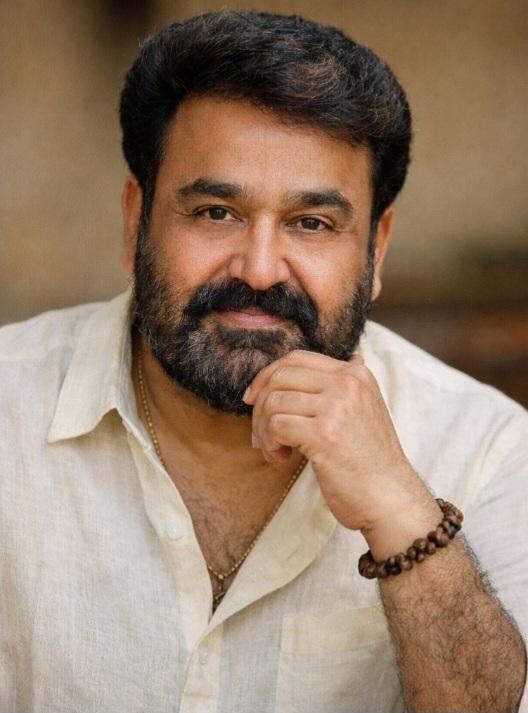
According to the available information, Mohanlal (Mohanlal Viswanathan) was born on 21 May 1960 in the village of Elanthoor, Kollam district (present-day Pathanamthitta), Kerala. His father was Viswanathan Nair, a former law secretary in the Kerala Government, and mother Santhakumari. He grew up in Mudavanmugal at his paternal home in Thiruvananthapuram, from where he received his school education and later graduated in Commerce. As a growing teenager, he developed a keen interest in wrestling, and was the Kerala state wrestling champion in 1977 and 1978. A suave and thorough gentleman, he has a prolific acting career spanning over four decades by now having worked in around four hundred films; although predominantly active in Malayalam cinema but, at times, he has also worked in Tamil, Telugu, Kannada movies and Hindi. He got married to Suchitra, daughter of the Tamil film producer K. Balaji, in 1988, and the couple have two children. He resides in Kochi but also owns house and other non-movable properties in Chennai and many other places.
Mohanlal started his acting career in 1978 with a role of a mentally-challenged character which ran into censorship issues and was not released for over two decades. Then he was cast in a lead antagonist role in 1980 in the movie Manjil Virinja Pookkal, which became a major commercial success. Till 1985, he acted in over two dozen films, a majority of which were negative roles but through Ivide Thudangunnu, role of a protagonist with “good heart”, he became a successful hero in 1984. This followed another comedy film by Priyadarshan in the comic role of a poor young man in love with a girl who thinks him to be a rich person. These movies established him as a successful and versatile actor, Priyadarshan and Mohanlal are said to have worked together in as many as fourty-four movies. During the next fifteen years, he had worked with almost all big names of South cinema in many successful movies establishing him as a successful celebrated actor by the turn of century.
Mohanlal acted in Narasimham in 2000 playing a rogue hero with a “good heart” and the movie became the highest-grossing Malayalam film of all time as also a trend-setter type-casting him in many similar larger-than-life action hero roles. He played a Mumbai police IPS officer in 2002, his first Bollywood film in Hindi, for which he won the International Indian Film Academy Awards (IIFA) and Star Screen Award for Best Supporting Actor. Some other notable Hindi movies include ram Gopal Verma ki Aag (2007), Tezz (2012), and the upcoming Vrusshabha. Some of the popular Hindi movies like Drishyam and Bhool Bhulaiyaa are franchise/remake of his Malayalam films. This writeup is beyond the scope of doing full justice with his long journey in Indian cinema, where he is widely appreciated and lauded as one of the most versatile actors of all times, having acted in about four hundred films. However, the author wishes to list his five most popular movies each in the category of commercial cinema as Kireedam (1993), Devasuram (1993), Aaraam Thampuran (1997), Drishyam (2013), and Lucifer (2019) as also critically acclaimed parallel cinema (classical category) Bharatham (1991), Kalapaani (1996), Iruvar (1997), Vanaprastham (1999), and Thanmathra (2005). In the aforesaid categories, the former five represent massive box-office success characterized by intense drama and mass appeal, while the latter five showcased his potential of subtle acting and profound character depth.
For his valuable contribution to cinema, Mohanlal, as an actor, producer and playback singer, was honoured by the Government of India with the Padma Shri in 2001 and the Padma Bhushan in 2019. Recently, President of India honoured him with the Dadasaheb Phalke Award, the highest award in the field of Indian cinema, in 2025 for his outstanding contribution to the growth and development of Indian cinema. Among many other coveted cine awards, two National Film Awards for Best Actor, 3 similar awards in the categories of Special Mention (feature film), Special Jury Award (feature film) and Best Feature Film (as producer), nine Kerala State Film Awards, nine Filmfare Awards South, 2 Screen Awards, one International Indian Film Academy Award, and umpteen other awards in different categories stand to his credit. Besides, he is well known for his philanthropic work for the underprivileged and also as goodwill ambassador for the government and other nonprofit organizations for the humanitarian and public service causes. During over four decades of public exposure, he invited some controversies and criticism, too, such as his remarks on “Me Too Movement”, possession of Ivory Tusks, some backlash for a film in 2025, and his participation in a Jamaat-e-Islami event but none of them were of the nature of personal scandals or of substantial nature impacting public morality.
Based on the criteria of exceptional acting, inherent elegance, and high ethical standards (including morality and humility), Mohanlal is frequently cited as one of the best all-time actors in Indian cinema. Also, he is widely regarded as a “complete actor” due to his ability to blend naturalistic acting with profound emotional depth. Another term affectionately used for him “Lalettan”; of this Lal is part of his name and -ettan in Malayalam implies ‘elder brother”. For his patriotism, he is the only known Indian actor to be formally inducted as a Lieutenant Colonel into the Territorial Army. Here are some inputs on his acting, elegance and ethics.
Acting:
- Natural & Intuitive Complete Actor: Mohan Lal is spontaneous and intuitive who avoids over-the-top melodrama in favour of realistic portrayal of characters played by him. In past, reportedly he has described his acting akin to “entering another person’s body” and his ability to do diverse and complex characters with ease has earned him the title of a “Complete Actor”.
- Master of Micro-Expressions: He is known to have tremendous control over all kinds of expressions with minimum subtle gestures, often without uttering a word as in Kireedom.
- Unique Dialogue Delivery: His characteristic distinct and often rhythmic dialogue delivery is unique adding authenticity to characters played by him.
- Subtle “Body acting”: In his roles, he seems to be using whole body, including eyes, hands, facial muscles, to convey deep emotions rather than overly depending on dialogue delivery. His body actions incredibly appear natural, subtle, effortless and nuanced.
- Versatility: His transitions between different genres viz. comedy, action or intense drama are seamless and perfect; the aforesaid averment is fully vindicated by his nuanced drama in Thanmathra, action-comedy in Poochakkoru, and emotional depth in Bharatham.
Elegance:
- Naturalism and Subtlety: Unlike so common flashy and loud demeanour by celebrities in illusory world of cinema, Mohanlal’s elegance is reflected in his subtle, effortless and realistic performances that looks so natural and livid…an art of behaving rather than acting in front of the camera.
- Dialogue Delivery & Subtle Expression: His dialogue delivery appears natural and spontaneous with subtle eye movements and quite smiles bringing immense depth to the characters played.
- Graceful Screen Presence: His ability to do diverse roles with poise and charm has earned him the reputation of a “master craftsman”. Then, his versatility of seamless transitions in situations of intense drama, action or comedy with equal ease serves like an icing on cake.
Ethics – Moralistic & Principled Approach:
- Supportive: Mohanlal is well regarded offscreen for his discipline, humility and respect for the industry, colleagues, co-stars and support/ground staff.
- Humble and Grounded: Despite roaring popularity and decades of stardom, he is known as a down-to-earth, modest and shy gentleman creating a harmonious atmosphere for others on movie sets.
- Professional Integrity: He is known his discipline and preparedness before camera, and a high level of dedication to his roles.
- Responsible and Proactive: Best illustrations are his responses to the Hema Committee Report (2024) about working environment in the film industry, including his resignation from his position in AMMA on moral grounds.
2. Sai Pallavi
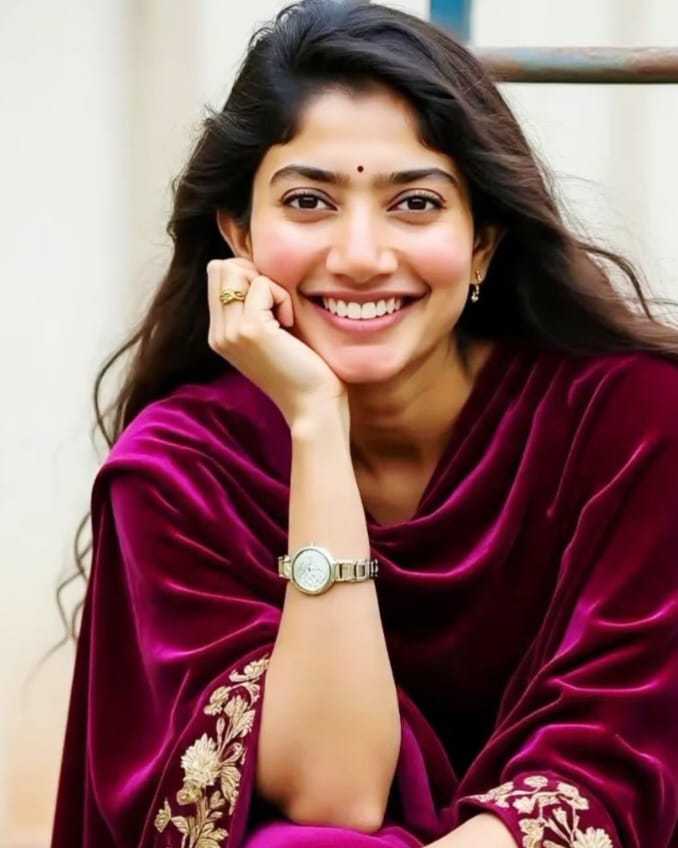
According to available information, Sai Pallavi (Sai Pallavi Senthamarai Kannan) was born to Senthamarai Kannan (father) and Radha (mother) on 9 May 1992 in Coimbatore, Tamil Nadu. She was raised and received early education in a local convent school at Coimbatore and later on medical studies leading to a medical degree in 2016 from the Tbilisi State Medical University, Georgia. Apart from her native language Tamil, she is comfortable and fluent in English, Telugu, Kannada, Malayalam, and Hindi as well. Her current home town is Kotagiri in the Nilgiris district, Tamil Nadu, and she has a younger sister who is an aspiring actress, too. Apart from her acting skills, she has excellent dancing skill, too; earlier, she performed well in some dance reality shows in the past. Apart from her natural acting and grace, she is widely acclaimed for her exceptional dancing abilities – with a rare blend of spontaneity, raw energy, authenticity, rhythm and expression, which very often mesmerises her fans and audience.
Her breakthrough film was Premam (2015) by the Malayalam film director Alphonse Puthren, which she is said to have reluctantly accepted after initial misunderstanding between them, while she was still studying for her medical degree. She received many awards as “Best Female Debut”, including the Filmfare Award for Best Female Debut, for her role as Malar in this film. During the next 3-4 years, she ventured into Telugu and Tamil cinema also with the career experiencing fluctuations with a mix of successes and failures, including either she herself dropped out from a film or the project itself was shelved for some reason. However, during the same period she delivered some successful movies like Fidaa (2017), Middle Class Abbayi (2017), and Maari 2 (2018). In 2018, her film Padi Padi Leche Manasu was a commercial failure, for which she reportedly refused to accept her full remuneration that indicates her high moral precepts and ethical standards. In a psychological Malayalam movie Athiran (2019), she played Nithya Lakshmi, a non-verbal autistic character using her expressions and body language, which, to this writer’s opinion, is one of the best portrayal of emotions in movies by her. By the year 2020, she had fully established herself in the South cinema, and at the young age of 33 years, she is well known Pan-India celebrity with a tag of one of the most likeable and successful actresses of all times.

for Amaran (Tamil)
With her growing popularity, she has invited a lot of curiosity and interest among the Bollywood film-makers and actors keen to work with her. She agreed to an offer in July 2025 and now portraying Goddess Sita in the upcoming two-part adaption of Ramayana in Bollywood, the first part set to be released in November 2026 on the Diwali eve. Her dance song “Rowdy baby” opposite South actor Dhanush in the movie Maari 2 has set a record of being first South Indian (Tamil) song to have crossed over 1.5 billion views on YouTube. She was honoured with Kalaimamani award, the highest civilian honour in the arts and culture field, by the Government of Tamil Nadu in 2021. Also, she has so far won seven Filmfare Awards South in various categories for her performances in South movies such as Premam (2015, Best Female Debut), Fidaa (2017, Best Actress), Love Story (2021, Best Actress), Amaran (2026, Best Actress), Shyam Singha Roy (2021, Critics Award for Best Actress), Virata Parvam (2022, Critics Award for Best Actress), and Gargi (2022, Best Actress). She is often cited and appreciated for once turning down a Rupees Twenty Million endorsement deal for a fairness cream brand, owing to her disapproval of the message fairness creams promote and her own preference for the natural beauty.
Sai Pallavi has not invited any substantive controversy for her personal conduct and demeanour. Few years back, her contextual remarks in an interview to an Andhra magazine on Indian military and cow vigilantism did generate some controversy but it soon subsided with her clarification. Based on her public persona, industry reputation, and career choices, Sai Pallavi is widely regarded as an elegant and principled (moralistic) actress both by the media and fans. She has built a reputation for authenticity, often appearing without makeup on screen and choosing roles that emphasize substance over glamour. Here are a few details and attributes why Sai Pallavi, to this writer’s opinion, fits bill of the best female actor on parameters of acting, elegance and ethics among the contemporary actresses in the Indian cinema.
Acting:
- Natural Acting & Expression: Sai Pallavi is often remembered for her raw appeal i.e. no make-up approach to acting, portraying realistic characters without application of excessive cosmetics or glamour. Particularly worth mentioning are her expressive eyes with ability to convey intense and deep expressions with subtlety. Besides, she is known for her commitment to character authenticity with value and substance while signing films.
- Versatility in Roles: Spontaneity and versatility are her natural attributes that easily fit her into different kinds of roles such as a lively teacher in Premam, determined fighter for justice in Gargi, or a mentally-challenged girl with autism in Athiran.
- Strong Emotional Depth and Impactful Performance: She does exceptionally well with ease in roles demanding emotional and high-tension scenes; films like Gargi and Amaran are some cases in point.
- Exceptional Dancing Ability: A lot of credit is accorded to her natural grace and rhythmic dance performances in the success of films like Maari 2 and Love Story.
- Self-Dubbing: With her multi-languages’ knowledge,she has been dubbing for self in multiple South Indian languages adding authenticity to her performances. Recently, she did it in Hindi too for her role in Amaran, that also shows her commitment to connect with wider audience.
Elegance:
- Minimalist Aesthetic: She is widely known for her “no-makeup” policy for the characters played, thereby redefining female beauty standards and norms in the film industry.
- Down-to-earth: Despite her tremendous success and popularity, she continues to remain grounded, humble and polite, generally away from the typical, over-the-top glamour of stardom, for which typically a majority of Bollywood and other stars are known.
- Graceful Dressing Sense: She is so often found in sarees and traditional Indian ethnic wear, a cultural semblance and a symbol of elegance.
Ethics – Moralistic & Principled Approach:
- Rejection of Endorsements: In an industry, where even multi-billionaire stars are unable to resist temptation for money (unsatiable greed) in doing endorsements for the health hazardous substances like “pan masala”, Sai Pallavi is known for turning down a ₹20 million fairness cream advertisement, stating clearly that such products go against her values and ethics.
- Role Selection: She is known to accept role offers which are performance-driven and meaningful with some social message rather than just typecast commercial ones.
- Decency and Demeanour: She is known to avoid skimpy dresses, vulgar display of body, and follows a strict “no-kissing” policy on screen.
- Reverential Attitude: She is known for treating fellow co-stars and crew members with warmth and respect.
- Independence: In true sense, she is a self-made star and a qualified doctor who has achieved success without relying on others or hiring any public relations agency.
- Personal Integrity: Articulate, value driven, grounded, and largely controversy-free with her ethical consistency and personal integrity.
Though largely active in South Indian cinema, Sai Pallavi has a Pan-India appeal for her acting, elegance and ethics for her natural presence without blending with any manufactured glamour. In the context of personal integrity i.e. being articulate, grounded, value-driven, and largely controversy-free, if one looks for the Bollywood-only equivalent, the closest contemporary actor would be Vidya Balan but Sai Pallavi stands tallest across the Indian cinema on date. To put it in one line, she stands at the top in acting, embodying elegance without artifice and ethics without announcement, mostly portraying roles that offer dignity to woman rather than a glam-doll typecast/image.
Postlude
In short, Indian actor Mohanlal and actress Sai Pallavi stand tall in Pan-Indian cinema today as beacons of professionalism, artistic brilliance as also unwavering ethics in the Indian film industry, by and large combining unmatched talent with personal grace. Widely appreciated as the “Complete Actor,” Mohanlal has spanned over four decades with unparalleled performances, so to say, demonstrating an effortless, natural style, elegance and ethics. Similarly in such a short span, young Sai Pallavi has redefined stardom through her raw, unglamorous performances emphasizing inner beauty besides a firm, principled approach on unacceptable commercial offers in the industry rather than simply succumbing to any pressure or greed. In the context of much maligned concepts of cinema worldwide like the concept of “casting-couch” and “#MeToo (about sexual abuse/harassment) movement few years back, she is a shining example that if one truly has requisite talent with moralistic-elegance, none can venture to exploit the actor’s dignity.
Beyond their on-screen success, both the actors are family-oriented, spiritually inclined and culturally grounded, respecting institutions, elders and values – hallmarks of Indian ethos. Many of their movies are deeply rooted in Indian Sanatana culture and traditions. A few classic illustrations (also not the only ones) of these values are Mohanlal’s Bharatham and Vanaprastham, and Sai Pallavi’s Shyam Singha Roy and Fidaa, representing a blend of devotion, traditional art forms, cultural heritage and social ethics, which are core elements of Bhartiya (Indian) culture. If Mohanlal is widely respected for his rootedness in culture, often portraying characters that embody duty and familial love, Sai Pallavi is celebrated for her elegance and dignity, often choosing roles that uphold modesty, as reflected in her decision to avoid skimpy outfits and intimate scenes. Together, they exemplify how one can professionally navigate largely the glamour and illusory world while maintaining high moral standards, preserving cultural values, and leading a disciplined, family-oriented life.
Note: Depending upon largely social and cultural as also other factors, different people may have different outlook and perspective on acting, elegance and ethics as also personal opinion about actors; hence, the writer does not expect from the readers to subscribe to his views.
4,985 total views, 14 views today




No Comments
Leave a comment Cancel