



There is an old Hindi saying “Jiski Lathhi Uski Bhains”, the literal meaning of which is that whoever holds the stick owns the buffalo. In essence, it signifies that the one who has power, strength, or influence to control wealth and resources, gets own way regardless of justice or fairness of means (English equivalent could be “Might makes Right”). During the last few centuries of the colonial era, some Western nations amassed wealth and power at the cost of mostly exploited nations of the global south. Emerging as the world leader and superpower after the 2nd World War, the US and its close allies mostly from the Western Europe, through various supposedly independent institutions, have been setting the narrative, agenda and verdict worldwide about the global community on umpteen parameters like democracy vs. autocracy, secularism vs. communalism, human rights, freedom of speech and expression, women and children issues and welfare, minorities rights, environment, and so on, so often adapting double standards regardless of what is actually occurring in their own land.
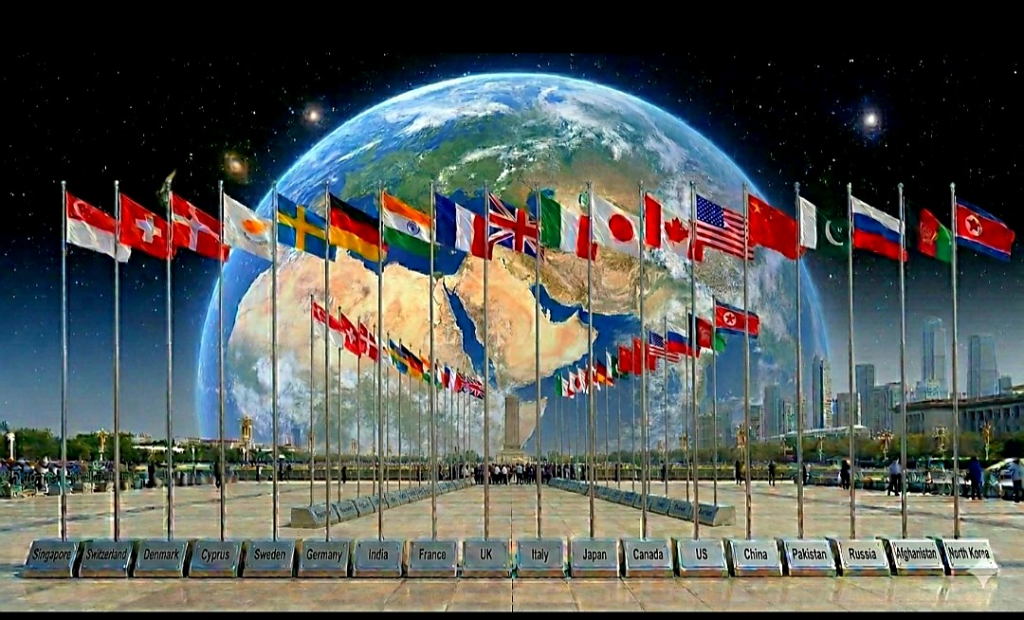
Accordingly, a nation’s stature has been measured if not solely then overwhelmingly by its Gross Domestic Product (GDP), military prowess including the nuclear arsenal, and technological dominance for many decades now. On this matrix, China has emerged as the main challenger to the US during the last two decades while India isching up on GDP and technological development with a continuous record of a high annual growth rate for almost a decade now. Needless to mention, the world faces unprecedented challenges – from climate volatility to widening socio-economic inequality – and West driven traditional metrics have failed to account for a nation’s true ethical footprint. In such an uncertain environment, on an Indian organization’s initiative, the recently released report on the Responsible Nations Index (RNI) 2026 emerges as a milestone event and paradigm shift for a more realistic assessment of the nations in the changing world order. Though for the critics with vested interests, it may look like a disruptive analytical framework, but in this author’s opinion, it is rational and apt enough to shift the focus from the unbridled “Power” to an obligated “Accountability.”
Authorship and Objectives
In January 2026, the World Intellectual Foundation published a pioneering global framework based the Responsible Nations Index (RNI), shifting the paradigm of national success from the traditional parameters of GDP, military might, and economic strength/influence to a more rational and pragmatic ethical governance and global stewardship. The RNI was conceptualized in India through a collaboration among the World Intellectual Foundation (WIF), Jawaharlal Nehru University (JNU), and Indian Institute of Management (IIM), first two based in New Delhi and third one in Mumbai, as a response to the growing need for a more humane and equitable global order. The chief architect and driving force behind this study i.e. WIF is a non-partisan, sector-agnostic global think tank established in January 2021 to foster large-canvas thinking for the social benefit in global context. The other two viz. JNU, New Delhi and IIM, Mumbai are decades old, well known, renowned and credible institutions in India in their respective fields.
The report on RNI seeks to answer the fundamental question as to how a nation utilizes its resources for the collective good of its citizens and the planet at large. In a way, RNI renders a true moral compass for the twenty-first century statecraft evaluating nations through the microscopic lens of internal justice, environmental stewardship and external peace. Of the three major collaborators cited above, the World Intellectual Foundation spearheaded the study with a high level academic and policy collaboration from the JNU and IIM Mumbai. The study was initiated by WIF in the year 2023 focusing on ethical governance, sustainable development, and global cooperation with other major collaborators mainly contributing as under with inputs on methodology, data aggregation, and analytical frameworks.
JNU: Provided scholarly depth and theoretical framework.
IIM Powai, Mumbai: Conducted methodological validation and data analysis.
Dr. Ambedkar International Centre, Delhi: Served as the primary venue and institutional partner for the report launch.
The study initiated in 2023 took about three years of a serious and sustained academic and policy research efforts involving 154 nations; the abridged version of report was released on 19 January 2026 in New Delhi by former Indian President Ram Nath Kovind; the final detailed report is expected to roll out in March 2026. Its ultimate aim is to foster dialogue on sustainable leadership among nations shifting international attention and discourse towards human well-being, planetary care and shared stewardship. If the objectives are to be classified as the main and allied or the primary and secondary objectives, they could be summarized as under:
A – Primary Objectives
i) Shift focus from power to accountable responsibility in moving beyond GDP-centric and military-power strength to a more balanced, ethical and value-based assessment of every nation’s performance.
ii) Encourage ethical governance through responsible conduct in governance, global relations and environment sustainability.
iii) Promote global dialogue and policy formulation among nations towards better policy reflection, increased accountability with sustainable development goals (SDGs).
B – Secondary Objectives
i) To highlight an all-encompassing Global South perspective inter alia including defects in the current Western-led indices, while promoting a more inclusive and nuanced perspective on the national progress.
ii) To increase global awareness about the institutional learning from the best practices of more responsible nations.
iii) To reflect civilizational values, aligning it with the universal concepts like Vasudhaiva Kutumbakam (the world is one family).
Committee Composition and Terms of Reference (ToR)
Although the author could not lay hands on full official committee list in the papers and documents made public so far, but available information suggests that the study was overseen by a multi-disciplinary committee of senior academics, policy experts, including former diplomats. It was led by Sudhanshu Mittal (Founder of WIF), and included prominent professors from JNU and management experts from IIM Mumbai.
Broadly, the terms of reference included for evaluation are as under:
- Evolve a composite index using 58 objective indicators across 7 dimensions.
- Utilize only transparent and globally recognized data from the institutions such as the United Nations institutions, World Bank, World Justice Project, etc.
- Create a three-pillar model i.e., Internal, Environmental, and External responsibility.
The study is expected to redefine success in terms of 1) how responsibly a nation uses its resources beyond its GDP (economic strength) and military metrics, 2) ethical bench-marking through a global dialogue on climate justice, social equity and food security, and 3) incentivize responsibility through focus on the well-being of their citizens and the planet at large.
Methodology and Timeline
The RNI has been designed to evaluate the performance of nations through the microscopic lens of responsibility rather than the economic influence and/or military power. It is grounded in a normative framework that emphasizes equity, sustainability, peace, and ethical governance, while remaining empirically robust and globally comparable. For the evaluation of 154 countries, a “bottom-up” approach to data was adopted operationalizing the index through 3 core responsibilities, further broken down into 7 dimensions, 15 aspects, and 58 specific indices.
The three core pillars of responsibility are briefly cited as under which served as umbrella to various dimensions, aspects and indicators.
Internal Responsibility: This is measured by the nation’s obligations towards the well-being, dignity and empowerment of its citizens.
Environmental Responsibility: Actually, represents a nation’s commitment to ecological protection and sustainable development.
External Responsibility: How a nation conducts and contributes within the international order for the global peace and stability.
These pillars are operationalized through seven dimensions viz. Quality of Life, Governance, Social Justice & Empowerment, Economic Performance, Environmental Protection, Commitment to Peace, and International Economic Relations, captured through 58 carefully selected indicators as sub-division of different aspects.
The RNI is designed to assess the national performance through the lens of responsibility rather than muscle power or economic resourcefulness. It is grounded in a normative framework that emphasizes equity, sustainability, peace, and ethical governance, while remaining empirically robust and globally comparable. Data for the Responsible Nations Index is drawn from credible and publicly accessible international sources, including the World Bank, United Nations agencies, International Monetary Fund (IMF), World Health Organization (WHO), Food and Agriculture Organization (FAO), International Labour Organization (ILO), and World Justice Project, using the latest available data as of 2023. While the WIF spearheaded the overall development, JNU provided academic collaboration, and IIM Mumbai was specifically responsible for the methodological validation, ensuring the statistical weightage and indexing processes were rational and rigorous.
| Phase | Timeline | Key Activities |
| Conceptualization | 2023 – 2024 | Evolution of the normative framework and selection of the three core pillars. |
| Consultation | Mid 2024 – 25 | Deliberations with over 200 global academicians, researchers, policy experts in in-house meetings. |
| Validation | Late 2025 | Methodological vetting by IIM Mumbai and finalization of the 58 indicators. |
| Abridged Launch | 19 January 2026 | Unveiling of Abridged Report at the Dr. Ambedkar International Centre by Ex-President RN Kovind. |
| Full Release | March 2026 | Scheduled release of the comprehensive report featuring extended datasets and thematic chapters. |
From the foregoing, it would be evident that the committee followed an inclusive and rigorous three-year long academic and policy exercise in different phases in terms of research, validation and data aggregation before culling out an abridged report. The research work inter alia included identifying responsibilities, dimensions, aspects and finally 58 indices across the sectors like healthcare, social justice and international peace. This was followed through a methodical testing by IIM Mumbai in collective collaboration to ensure that the indicators thus chosen were statistically sound and free of bias. In the final phase, a total of 154 countries, almost all nationalities that matter, were considered utilizing as for as possible the most recent datasets. While the report is an independent academic synthesis and product, the Indian government has acknowledged it through the Press Information Bureau (PIB) and India Brand Equity Foundation (IBEF) as a credible alternative to Western-centric indices.
The 3 Core Pillars
Here is a summary of the three core pillars across the 58 indices used to arrive at grading of nations on responsible governance:
Pillar 1: Internal Responsibility
This pillar measures every country’s commitment to the dignity, justice, and well-being of its own citizens inter alia including the following indicators.
Quality of life: This includes aspects like the life expectancy at birth, infant mortality rate, maternal mortality rate and universal health coverage (UHC).
Equity & Equality: This addresses issues like the gender ratio, inheritance/abortion rights, equal pay for equal work and percentage of women in parliament.
Social Justice & Empowerment: Includes social security/unemployment allowances for vulnerable groups (differently-able, tribal, and indigenous people), policies on child labour and literacy rates (oral and written).
Rule of Law based Governance: Includes crucial factors like availability of Constitution, access to legal aid including free/subsidized, corruption level, presence and regularity of free and fair elections.
Civil and Digital Freedom: Includes data sovereignty (protection laws), cost and access to 4G/telecom, and the level of digital freedom (media independence and lack of social media restrictions).
Pillar 2: Environmental Responsibility
This pillar assesses how a country manages its natural resources reflecting a commitment to this green planet’s future.
Environment and Sustainability: Indices for this include total forest area as a percentage of country’s land, CO2 emissions in terms of metric tons per capita, Air Quality Index (AQI), etc.
Energy and Resource Management: A considerable significance is accorded to the renewable energy consumption as a percentage of total energy used, national policies on energy consumption, management of land, water and air.
Inter-generational Planning: Under this, the evaluation of the long-term sustainability plans was done and commitment to climate action goals ascertained.
Pillar 3: External Responsibility
The third pillar, very crucial too, evaluates a country’s commitment and contribution to global peace, stability and cooperation.
Peace & Security: The indicators like the participation of country’s troops in UN peacekeeping operations, commitment to peaceful co-existence, and national policies regarding refugees, are covered under this.
International Economic Relations: It measures adherence to global norms, international engagement for humanitarian causes, participation in multilateral economic cooperation, etc.
Economic Performance: This considers factors like the GDP per capita growth, gross debt position, and ease of doing business, etc. In this context, the responsibility lens focused on the country’s commitment and ability to support global stability rather than mere volume and influence of its economic power.
RNI: Global Rankings
The author feels that this study represents a paradigm shift as first global index to measure how responsibly nations use their national resources and power focused on citizens, environment, and global impact rather than conventional power indicators of their economic influence and military power. It has a wide coverage with 154 countries with 58 indicators using credible international data and governance metrics from multiple reputed international agencies. The RNI delivers a clears message that wealth and power alone do not guarantee a responsible governance and that even small or medium-sized nations can outperform traditional world leaders like the US, Russia or China. The report unlocks that responsibility is a forward-looking gauge of national progress, linking ethical governance with the sustainable development and global cooperation.
| Country | RNI Ranking | RNI Score | Country | RNI Ranking | RNI Score |
| Singapore | 1 | 0.61945 | Italy | 34 | 0.53204 |
| Switzerland | 2 | 0.58692 | Japan | 38 | 0.52930 |
| Denmark | 3 | 0.58372 | Canada | 45 | 0.52390 |
| Cyprus | 4 | 0.57737 | US | 66 | 0.50880 |
| Sweden | 5 | 0.57397 | China | 68 | 0.50547 |
| Germany | 12 | 0.55703 | Pakistan | 90 | 0.48336 |
| India | 16 | 0.55151 | Russia | 96 | 0.47896 |
| France | 17 | 0.54835 | Afghanistan | 145 | 0.41398 |
| UK | 25 | 0.53849 | North Korea | 146 | 0.41329 |
Needless to mention, the Responsible Nations Index 2026, released by Delhi based World Intellectual Foundation on January 19, 2026, represents a paradigm event and major shift in the global bench-marking in that, as already mentioned earlier, it evaluates nations not by their gross wealth or military prowess, but through the critical lens of their internal, environmental, and external commitments and responsibilities. In the following paragraphs, the author has attempted a crisp analysis of the findings, including significant take always, in the abridged report.
Among the high performers are several small nations with larger footprints including a cluster of select northern and eastern European nations with consistent high score. In fact, of the 20 top most rankings, as many as 18 positions are occupied by these nations, sans Singapore (1) and India (16), suggesting their strong rule-of-law cultures, robust and inclusive welfare systems, and sustained commitments to decarbonation and climate ethics. Besides, several emerging economies, particularly India and South Korea, show exceptional satisfactory performance on dimensions such as inclusive welfare delivery, renewable energy adoption, equitable development and peacekeeping contributions, surpassing many high-income nations with robust military prowess that traditionally dominate global indices. The RNI thus underlines a significant global insight that the responsibility is not a by-product of wealth or military power, instead of a political will, institutional integrity and long-term commitment to equity and social justice.
Nations like Singapore (Rank 1), Switzerland (2), Denmark (3), Cyprus (4), and Sweden (5) dominated the top tier as they excel in care and stewardship in governance. These nations have demonstrated high scores in Internal Responsibility, prioritizing human dignity and social equity, as also in Environmental Responsibility with their committed, at times aggressive, climate action and sustainable resource management. Their success suggests that smaller and agile nations often maintain more transparent institutions and cohesive social welfare systems, allowing them to act more responsibly toward their citizens as well as in the global perspective compared to some sprawling and power-focused nations. By contrast, high-income economies such as the United States, Australia, UK or Canada, which traditionally garner more attention, display internal responsibility strength but are weak in environmental and external responsibility scores. Therefore, their high institutional capacity and economic scale are offset by elevated carbon intensity, limited environmental ambition, or constrained peace- oriented international engagement.
India’s rank of 16th is certainly a standout feature, placing it in the league of Germany (12) and France (17th), even ahead of the latter, far surpassing the US (66th), China (68th) and Russia (96th). This high ranking reflects India’s progress as an inclusive welfare state which is delivery oriented, remarkable in renewable energy adoption, setting sort of a “norm entrepreneurship” in global peacekeeping and multilateralism. In contrast, the lower rankings of the US, China, and Russia are attributed to their significant lack of environmental footprints, domestic social inequalities, and external policies that often prioritize geopolitical dominance over collective global stability, proving that a high GDP or military strength does not earn or represent to a high national responsibility.
Just to illustrate the “Responsibility Gaps” of the most powerful countries, a case in point could be more recent developments, while US blatantly uses its muscle power at will to violate sovereignty and integrity of Venezuela for its oil and minerals resources, it simply turns a blind eye in adopting an absolutely neutral stance in Afghanistan where human rights take a nosedive with women systematically treated like mean citizens or even slaves under their new Islamic law. China, too, lowly positioned in the middle of the Index just two ranks below US, exhibits comparatively a sturdy internal delivery capacity but fares significantly below the benchmark when it comes to its external responsibility outcomes. Its environmental responsibility score reflects the structural impact of carbon-intensive growth, while its peace-oriented international engagements constrain its composite responsibility as a responsible nation. Some other bigger countries like Russia, Brazil, Mexico, Indonesia and South Africa similarly occupy mid-range to lower positions, reflecting strong social protection initiatives and development outreach on certain indices, but persistent weaknesses in environmental outcomes, governance accountability and external engagement.
The low rankings of countries of global south like Pakistan (90th), Argentina (92), Egypt (119), Iran (123), Saudi Arabia (128) show low responsibilities, even systemic failures in certain cases, in internal governance, environmental stewardship as well as external commitment & contribution. For many countries in this bracket, persistent internal conflict, lack of institutional transparency and poor human development indicators (like justice and social inclusion) drag down their scores. Similarly, in many conflict-prone and/or politically unstable regions, “responsibility” is compromised by survivalist policies, where the protection of human dignity and ecological resilience is often sacrificed for immediate political or military objectives.
If we look from the regional perspectives in general, RNI 2026 reveals a clear trend in that Europe continues to be the most responsible region, in fact, hosting nine of the top ten spots due to its mature social safety nets and environmental regulations. In contrast, Asia shows a wide variation; while Singapore leads the world, and India emerges as a responsible actor in top bracket of twenty responsible nations, a majority of others, sans South Korea, lag on three core pillars apparently due to rapid and unsustainable industrialization and other factors. The report also suggests a “Middle Power” trend where countries in the Caucasus (Georgia at 10th) and Eastern Mediterranean (Cyprus at 4th) are emerging as responsibility leaders, while the traditional superpowers and emerging superpower like China are increasingly viewed relatively as “irresponsible” stewards of the planet and global peace.
Postlude
In this author’s opinion. the World Intellectual Foundation isn’t just trying to add another ranking to the existing pile; instead, they are attempting to redefine the responsibility and “National Success” itself. It is certainly a bold and pathbreaking move by the Foundation to show a mirror to the world’s most powerful nations and suggest that “greatness” is no longer a measure of economic and military strength. India leapfrogs traditional Western heavyweights, it indeed underscores how much the global definition of leadership is shifting toward sustainability and social stability. The RNI also serves a new moral compass for the global governance and it should be taken seriously more so because it effectively demolishes the age-old illusion that economic wealth and military “hard power” suo moto translate to the success of the nationhood. By shifting the focus to “Internal, Environmental and External” responsibilities, the report puts out a mirror in front of traditional superpowers, revealing that high-capacity nations often leave the largest “irresponsibility footprints” in terms of climate neglect and social inequality.
It has occurred for the first time that a global index measures not just what a country can do, but also what it actually chooses to do for the collective good of its own people and the planet at large. Thus, it shows a remarkable accountability shift from power to purpose for the nations. The report synergizes the pillars of governance viz Internal, Environmental and External comprehensive indices to serve as a critical policy roadmap institutionalizing national accountability as a core metric of progress. The RNI also provides for a “Value-Based Diplomacy” as the domestic policies of nations such as social justice and carbon emissions have immediate cross-border consequences, too. Governments that choose to ignore the report’s findings also risk losing their reputation and moral authority needed to lead in a multi-polar world. Finally, the report also sets a paradigm that in the 21st century, the most influential nations will not be ones with very large economy and army, but those that prove they are the most responsible stewards of the global community.
Courtesy – WIF: Abridged Report on Responsible Nations’ Index 2026
10,337 total views, 1 views today




No Comments
Leave a comment Cancel